
Blast Email Strategies for Realtors: Target the Right Neighborhood Every Time
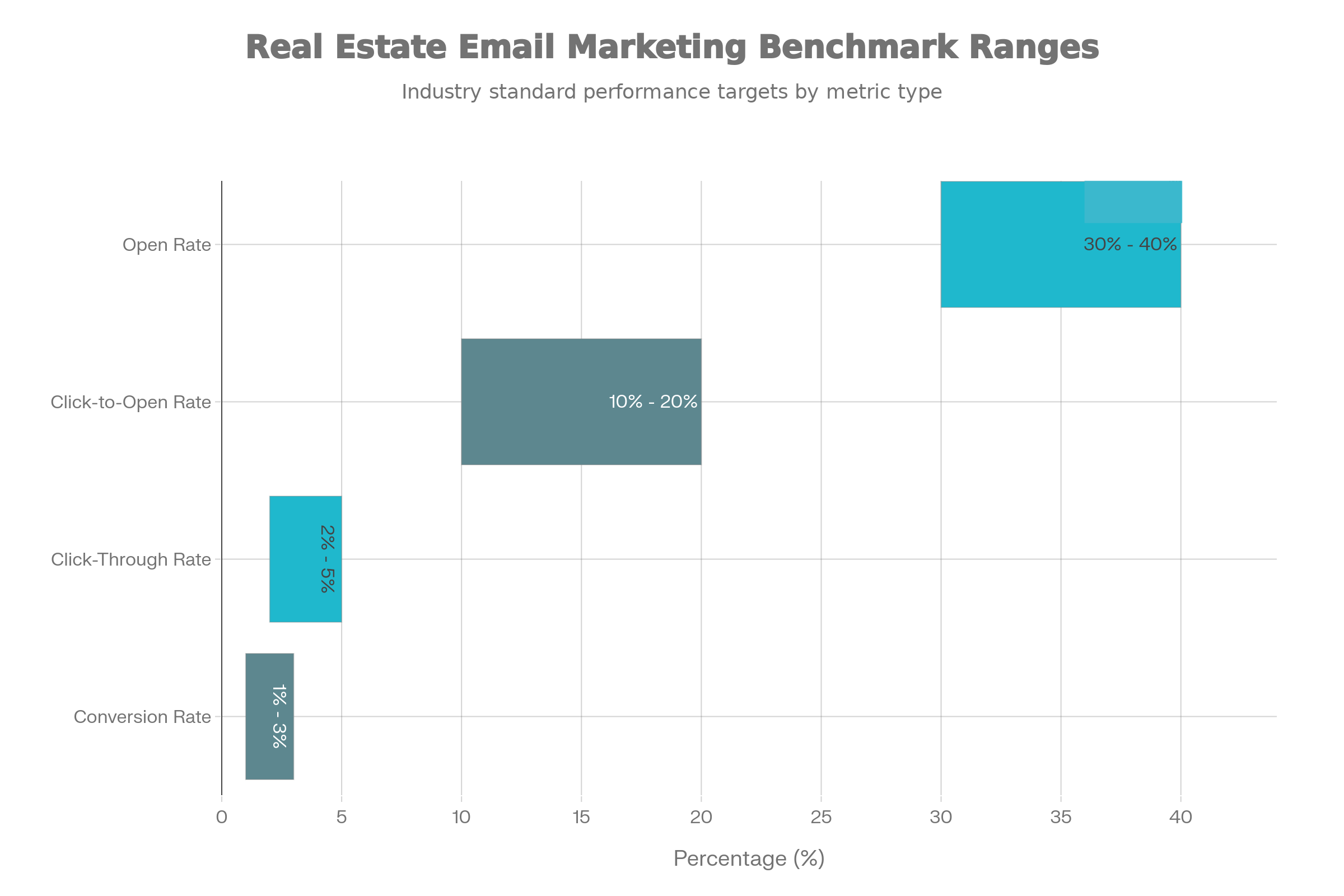
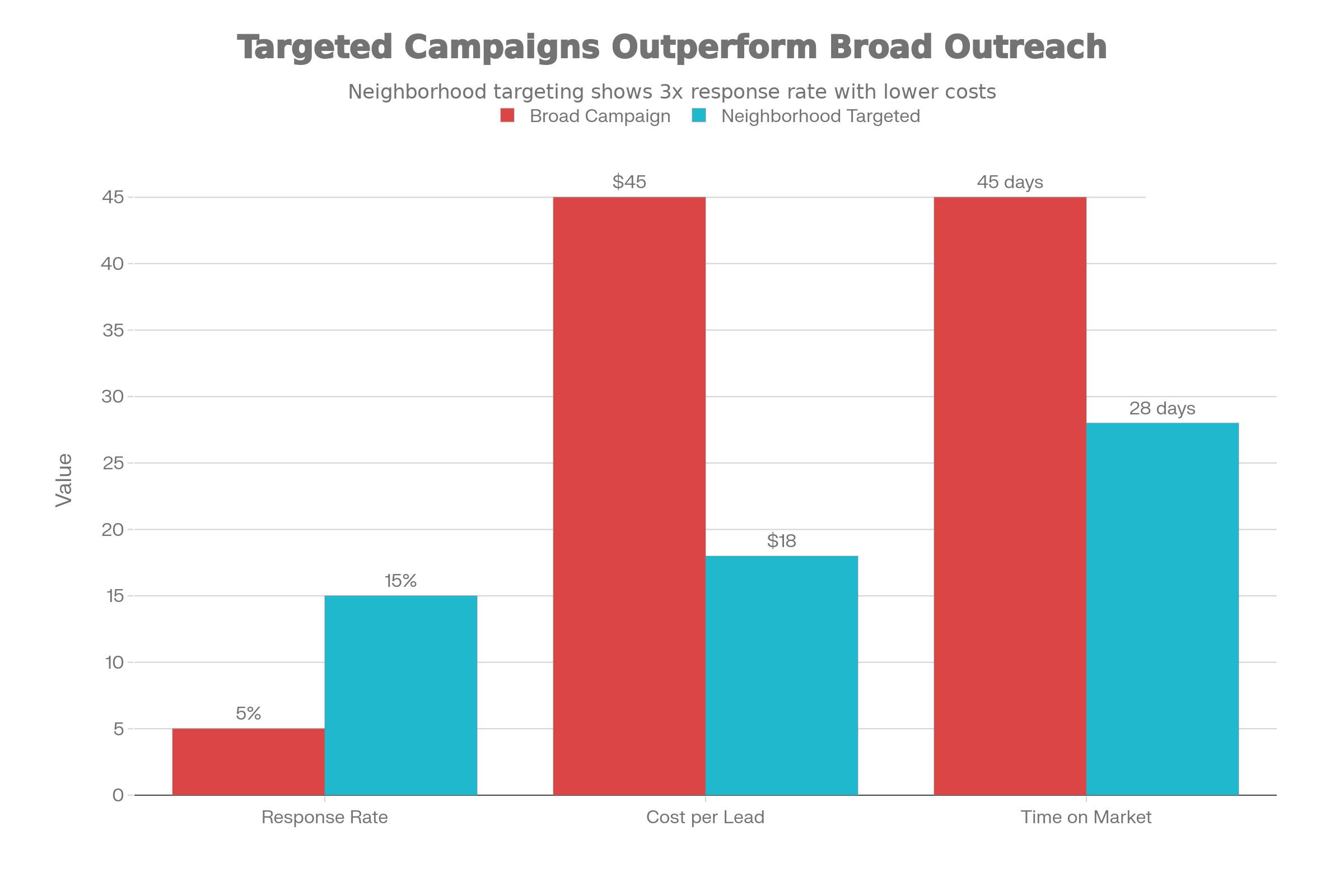
To target the right neighborhood every time with your real estate email blasts, you need 3 things: precise geographic data, a clear list of agents and buyers in that area, and a message that speaks directly to what those people actually want. Most agents skip the precision part and just blast everyone. That's why their response rates stay stuck at 5 percent or lower. When you focus your message on a specific neighborhood, with details that matter to people there, your response rates jump to 15 percent or higher.
The difference between a generic email and a neighborhood-targeted email isn't just the zip code. It's the entire frame. A buyer in Portland's Pearl District cares about walkability and urban amenities. A buyer in suburban Denver cares about schools and family space. An agent listing properties in both areas but sending the same email to both will get ignored. But send the Pearl District agent an email about the three new lofts that just hit the market with exposed brick and proximity to coffee shops, and now you've got attention.
Why Email Blasts Still Dominate Agent Marketing
Email remains one of the few marketing channels where you still own the relationship. You're not competing with an algorithm. Your message goes directly to the inbox, and that person reads it if the subject line matters to them. Real estate agents who use email marketing strategically see conversion rates between 1 and 3 percent on high-value actions like consultations or property valuations. That may sound small, but on a list of 500 agents in your target area, that's 5 to 15 warm conversations waiting to happen.
Consider the raw numbers. Email marketing generates roughly $40 in return for every $1 you spend. That's a 3,600 percent ROI when done right. For comparison, cold calling converts at just 1 to 3 percent and costs time you could spend on closing deals. Social media? It gets lost in the algorithm. But email sits in someone's inbox. They see your subject line, and they decide to open or delete. When that email is about a property listing in their neighborhood, they're much more likely to open it.
The average open rate for real estate emails hovers around 30 to 40 percent. That's significantly higher than most industries. But those numbers only happen when agents send relevant messages to the right people. Send a property email to agents who don't work in that zip code, and your open rate tanks.
The Geography of Success: Why Zip Code Targeting Actually Works
Here's what most agents get wrong: they think "neighborhood targeting" means sending to everyone in a five-mile radius. That's not targeting. That's just painting with a wider brush. Real neighborhood targeting means understanding what makes that specific area attractive to buyers and sellers, and then reaching the agents who specialize in moving properties there.
Zip code searches are now the highest-intent real estate searches on Google. When someone types "homes for sale in 90210" or "listings in Brooklyn Heights," they already know what they want. They're ready to act. Agents who position themselves as experts in those specific neighborhoods catch these buyers.
But here's the deeper insight: different neighborhoods attract different buyer profiles. A luxury condo building in Miami Beach draws a completely different buyer than a family home in suburban Austin. The agents who work these markets daily understand the nuances. They know the school districts, the property taxes, the rental income potential, the walkability scores. When you send them a property email that includes these details, it feels relevant to them. They're more likely to forward it to their buyers. They're more likely to contact you if they have their own inventory.
Research Insight
Research shows that geographic targeting increases engagement rates by 41 percent compared to broad campaigns. Why? Because the message matches the audience's actual problem. An agent in Portland trying to move a mid-century modern doesn't care about your new luxury listing in Malibu. But send that Portland agent an email about three mid-century homes that just entered the market, with details about the neighborhood's design heritage and renovation potential, and you've got their full attention.
Neighborhoods also have clear data points that fuel personalization. Average listing prices, average days on market, school ratings, commute times, neighborhood amenities, recent sales activity. All of this sits in public records. When your email references these specifics, it proves you understand the market. That credibility translates to more responses.
Building Your Neighborhood Email List: Who Needs to See Your Message
Before you send a single email, you need to be clear about who you're reaching. Are you sending to agents who work in that neighborhood? Are you sending to buyers who've shown interest in properties there? The list makes all the difference.
For agent-to-agent flyers, your audience is straightforward: real estate professionals who actively list or show properties in your target zip code. These are the people who can move your listings. They have buyer clients. They attend open houses. They know the market. Reaching them when you have a new property is pure business sense.
But agent lists decay. Agents move, change brokerages, go inactive. A list you built last year probably has 20 to 30 percent bad data. That's why dynamic zip code targeting matters. When you use a system that updates agent lists in real time and targets by specific zip codes, you're not sending to ghost accounts or inactive agents. You're reaching the people who are actually selling in that market right now.
For buyer-focused campaigns, segmentation matters even more. A first-time buyer list gets different messaging than an investor list. Someone looking for a starter home in Boise cares about affordability and proximity to employment. An investor scanning the same market cares about cash-on-cash returns and tenant demand. Send the wrong message to either audience, and you'll hit delete.
The practical approach: segment your lists by neighborhood and buyer type. If you're promoting a luxury property, target agents and buyers in the high-end segment of that neighborhood. If it's an investment property, target investors who've shown activity in multi-family or commercial real estate in that area. Generic lists get generic responses. Specific lists get specific interest.
Crafting Neighborhood-Focused Email Content That Gets Opened
Subject lines determine whether your email gets opened or deleted. For neighborhood-targeted emails, specificity wins every time.
The Wrong Way
"New Listing Available"
Generic. Forgettable. Probably ignored.
The Right Way
"New Luxury Loft in Pearl District - $875K, Walk to Everything"
Specific. Shows neighborhood, price point, and appeal.
The second subject line is 40 characters. It includes the neighborhood name, the property type, the price, and a benefit. An agent who specializes in Pearl District lofts will open that email. An agent who focuses on $500K single-family homes in the suburbs will delete it. That's exactly what you want. You're filtering for relevance.
Personalization moves the needle further. Real estate emails that mention the recipient by name and reference their neighborhood see higher open rates than generic blasts. Something like, "Jessica, three new listings just hit the market in Hayes Valley" tells the reader that this email is for them specifically, not part of a mass send.
The body of your email should do three things: establish credibility, provide actionable information, and make the next step obvious.
Credibility comes from knowing the neighborhood. If you're promoting properties in Austin's East Austin neighborhood, mention the recent revitalization, the new tech companies moving in, the mix of young professionals and long-time residents. Show that you understand what makes the area attractive. Agents in that market will recognize the accuracy. Buyers will see it as proof that this agent knows the community.
Actionable information means including actual property details. Photos, price, square footage, number of bedrooms, key features, listing date. An agent who might have a buyer for that property needs to know these specifics to act. The email should make it easy for them to learn more. Include a link to the full listing. Include your contact information. Make it clear that you're available to show the property or answer questions.
The call to action should be simple and clear. Not five different links. One clear next step. "Schedule a showing" or "Send me details on this property" or "Share with your buyers." Make it obvious what you want them to do.
Multi-Touch Campaigns: Why One Email Isn't Enough
Sending a single email about a property and expecting results is like knocking on one door and expecting to own the neighborhood. Most agents understand this intellectually, but they don't execute on it.
Studies show that it takes between 5 and 12 touchpoints before someone takes action. For real estate, that's probably on the conservative side. If you send an email about a new listing on Monday and get no response, most agents give up. But the agent you're reaching might have been in a showing. Might have had their email overloaded. Might not have had a buyer for that property at that exact moment.
A multi-touch neighborhood campaign works like this: send an initial email announcing the new listing with key details. Wait three days, then send a follow-up highlighting a specific feature or recent comp sale. Wait another few days, then send an email about an open house. If it's a slower-selling property, send monthly market updates about the neighborhood or price reductions.
This isn't aggressive. It's normal business practice. You're staying in front of the people who matter and giving them reasons to remember you. Each email should be valuable on its own, not just another nag.
Real estate email campaigns that use automation for follow-ups see conversion rates improve by up to 25 percent. That's because you're staying consistent without burning out yourself. A sequence that goes out automatically frees you up to focus on the next property or the next neighborhood.
The Role of Timing and Frequency
When you send your neighborhood email matters almost as much as what you say.
Emails sent on Tuesday through Thursday typically get higher open rates than emails sent on Monday or Friday. Monday feels like noise. Friday people are thinking about the weekend. Mid-week, when people are deep in work mode, emails actually get attention.
Time of day also shifts results. Emails sent between 10 AM and 12 PM see better open rates than emails sent at 6 AM or 9 PM. Again, this is when people are actively checking email and have the mental space to engage with your message.
For neighborhood campaigns, consistency beats sporadic blasts. If you send weekly market updates about a specific neighborhood or zip code, you're building authority. People start to expect your emails. They start to open them. If you send random emails at random times, you're just another message in an already full inbox.
Most agents overcomplicate this. They think they need to send daily emails. That burns people out. Send weekly or bi-weekly. Make each send valuable. Include market data, a new listing, a success story from that neighborhood, a local event. Give agents reasons to keep opening your emails.
Where Technology Makes the Difference
Building a spreadsheet of agents and buyers, then copy-pasting addresses into email manually, is not a strategy. It's a time waster. The moment you add more than 20 properties to your pipeline, you need actual technology to handle the volume and the targeting.
This is where services like Blastrow come in. You create a digital flyer for your listing in a few clicks, then blast it to all agents in specific zip codes automatically. The flyer lands in their inbox looking professional, complete with property photos, details, and a link back to a web page that's indexed by Google and crawled by AI models. That web page continues to work for you long after the email has been forgotten.
The key feature isn't the pretty design (though that helps). It's the dynamic zip code targeting. You're not paying to email every agent in three states. You're hitting the exact neighborhoods where your property is located and maybe the surrounding areas where buyers might be willing to expand. Your budget gets focused. Your results get better.
This matters for conversion because now agents aren't deciding whether to respond to an email. They're looking at a professional flyer that answers their questions before they ask. They see the listing photos. They see the price. They see the details. They can click through and contact you or forward to clients. The friction gets removed.
Compare this to cold calling. You spend an hour dialing agents in a neighborhood, hoping to reach someone who isn't in a showing or a meeting. You get voicemail 80 percent of the time. You leave a message no one listens to. Maybe one person calls you back. With email, you reach 200 agents in 30 seconds. Your flyer sits in their inbox all day. They can review it at their convenience. They can forward it to clients. They can click through and learn more. Your reach is exponentially higher.
Real Numbers: What Neighborhood Targeting Actually Delivers
When agents focus their email campaigns on specific neighborhoods instead of blasting everyone, the results shift significantly.
Broad Campaign
Targeted Campaign
A neighborhood-targeted campaign where your message is relevant to the zip code and the agents who work there sees a 15 percent response rate. Now you're at 150 responses from the same 1,000 agents. Same number of emails sent. Radically different results. Cost per response drops to $18.
Even better, properties promoted through neighborhood-targeted email campaigns spend less time on the market. Broad campaigns see properties sitting for an average of 45 days. Neighborhood-targeted campaigns see 28 days on average. That's 17 days faster, which in real estate can translate to thousands of dollars in price preservation.
Compliance and Best Practices: Don't Get Yourself Blocked
All of this works only if your emails actually land in inboxes. One way to destroy your sender reputation is to ignore email compliance. If you send to people who never agreed to hear from you, or if you send to lists full of invalid addresses, email service providers will flag you as a spammer.
The CAN-SPAM Act requires that every commercial email include an unsubscribe option. It requires that your subject line doesn't deceive. It requires that you include your actual physical business address. Follow these rules, and you stay out of trouble.
But beyond compliance, deliverability is a practical problem. Emails sent to invalid addresses bounce back. Every bounce damages your sender reputation. If you have a 20 percent bounce rate, email providers start treating all your emails as suspicious. They go to spam folders instead of inboxes.
This is another area where using a proper service matters. A tool like Blastrow handles compliance automatically. It maintains clean agent lists. It ensures your emails are formatted correctly. It tracks delivery and bounce rates. You avoid the entire technical headache.
Long-Term Authority: Turn Email Into Consistent Business
Most agents treat email campaigns as one-off efforts. They have a property, they blast it out, they move on. That's why they get mediocre results. The agents who build real income from email think differently.
They pick a neighborhood or a few neighborhoods where they want to dominate. They send regular market updates. They highlight new listings. They share local events and school information. They build authority in those specific areas. Over time, they become the agent that neighborhood residents and other agents think of when they think of that area.
This is neighborhood farming, but done through email. Instead of door knocking and direct mail, you're staying in front of people consistently and professionally. Agents receive your emails. They remember you. When their buyers ask about the neighborhood, they refer your listings. When you have a new property, they open your emails because they know your content is relevant.
The ROI compounds. Your first month, you send 10 emails about your target neighborhood. You get a few responses. Your second month, you send 10 more emails and some people remember you from month one, so open rates are higher. By month six, you've built a reputation in that neighborhood.
ROI Fact
Email marketing in real estate generates an average ROI of 3,600 percent over time. But that only happens if you stay consistent and focused on specific areas.
Frequently Asked Questions
Conclusion
Targeting the right neighborhood every time starts with understanding that generic email blasts don't work. Your message needs precision. It needs relevance. It needs to speak directly to the agents and buyers in a specific area.
When you focus your email campaigns on neighborhoods instead of spraying everyone, response rates triple. Properties sell faster. Your reputation in those areas grows. You become the agent people think of when they think of that neighborhood.
The agents and brokers who dominate their markets aren't necessarily the most talented. They're the ones who stay visible and relevant to the people who matter. Email, done with neighborhood focus and proper targeting, is how you do that.

Blastrow
Listing Promotions