
How to Use Content Marketing and Property Email Blasts to Get More Real Estate Referrals
Learn proven content marketing strategies that drive real estate referrals, including targeted property email blasts and hyperlocal campaigns that actually generate qualified leads and agent-to-agent deals in 2026.

When a real estate agent asks "How do I get more referrals?" the answer has shifted dramatically in 2026. Gone are the days of hoping past clients remember you or casting wide nets with generic emails to thousands of random agents. Today's most successful agents are building referral businesses through strategic content marketing combined with hyperlocal, targeted outreach. The evidence is clear: referrals now make up nearly 40 percent of how people find agents, and when agents focus on nurturing relationships through smart content, they close more deals at higher profit margins than any other lead source.
Here's what separates referral-focused agents from everyone else: they understand that getting referrals isn't about asking for them. It's about positioning yourself as the obvious choice through consistent, valuable communication. Whether that's an educational blog post answering the questions first-time buyers actually ask, a video walkthrough of the neighborhood, or a well-timed property email blast targeting the exact agents who've closed sales in your zip code, the strategy is the same. Give value first. Get referrals second.
Why Referrals Beat Every Other Lead Source
Before diving into the tactical side of content marketing, it's worth understanding why referral-based growth has become the primary focus for agents in 2026. According to recent industry data, agents who prioritize referrals over expensive paid advertising see transaction growth increase by nearly 30 percent, and their conversion rates sit at 30 percent or higher. Compare that to cold leads from paid advertising, which convert between 3 to 8 percent, and you see the financial logic immediately.
The 2026 real estate landscape shows a clear pattern: 42 percent of sellers and 40 percent of buyers found their agent through a referral from someone they trust. That trust isn't built overnight, and it's not built through one-off transactions. It's built through consistent, helpful communication. Agents who generate 70 to 80 percent of their closed deals from referrals and their sphere of influence (which includes friends, family, past clients, and professional contacts) stop worrying about monthly advertising budgets. Their referral engine becomes self-sustaining.
The math works like this: a single referral that closes into a transaction can generate a commission that covers thousands of dollars in marketing spend. When your content strategy focuses on positioning you as a trusted expert, that referral doesn't happen by accident. It happens because you've already demonstrated competence and value through how you communicate with your network.
The Foundation: Why Targeted Content Matters More Than Volume
Most real estate agents and brokers make the same mistake when they start content marketing. They create a lot of content hoping some of it sticks. They post five times a day on social media. They send weekly newsletters to massive email lists. They write blog posts about generic topics. None of this generates referrals at scale because none of it speaks directly to the specific problems their referral sources care about.
Targeted content starts with a simple question: "Who am I trying to influence?" The answer changes everything.
If you're looking for referrals from past clients, your content should answer the questions new homeowners face after they close. Moving tips. How to decode your home inspection report. Neighborhood guides for families with kids. Real estate market updates that keep them thinking about your expertise months or years after closing.
If you're looking for referrals from other real estate agents (agent-to-agent referrals), your content and outreach should solve the specific problems those agents face. A buyer or seller relocating to your market needs an agent who knows the area. A property in your specialty (luxury homes, investment properties, commercial real estate) needs someone with proven expertise.
The same principle applies to content for your sphere of influence. Your dentist doesn't want to read general real estate advice. Your dentist wants to know what's happening in your market that affects her decisions about her own home or investments. She wants to feel like an insider because she knows you personally.
This is where most agents' content strategies fail. They're broadcasting to everyone instead of directing to someone.
Long-Tail Keywords: Answering the Exact Questions Your Referrals Have
In 2026, the agents who win in referral-driven markets are those who own the specific question searches. These are long-tail keywords. Instead of competing for "real estate agent" (a search term with millions of results and brutal competition), you're competing for "best realtor for first-time homebuyers in Boca Raton with FHA loans" or "luxury commercial real estate agent near downtown Miami."
The conversion difference is staggering. Long-tail keyword searches have a 36 percent higher probability of conversion than short-tail searches. Why? Because someone typing that specific phrase has already done their research. They know what they want. They're not browsing. They're looking for a match.
Content that targets these long-tail keywords does two things simultaneously. First, it ranks better in Google searches because there's less competition for specific phrases. A blog post titled "How to Find Your First Home as a Teacher in a School District with a 9/10 Rating" might rank on the first page of Google within a few weeks, while a post called "How to Buy a Home" never will.
Second, it demonstrates expertise. When someone reads your article about buying a first home on a teacher's salary, and you mention specific programs, local lenders, and neighborhood details, you're no longer a generic real estate agent. You're a specialist. That's exactly the positioning that generates referrals, because people refer specialists, not generalists.
Your Content Strategy in 2026 Should Include
- Blog posts answering specific, searchable questions. Instead of "10 Tips for Home Sellers," write "How Selling Your Home Before Divorce Proceedings Affects Your Settlement in Florida." The second option targets a specific, hurting audience with real urgency.
- Neighborhood guides with detailed, local information. Not just the good restaurants and schools, but specifics. Crime rate trends. Property tax implications. What's happening with zoning. The agents in your referral network who work those neighborhoods will bookmark it and share it with relocating clients.
- Video content that answers questions step-by-step. First-time buyers ask Google "How long does closing take?" more than they ask agents. Create that video. Other agents will refer clients to it. Past clients will share it with friends considering a home purchase.
- Comparison content that helps people decide. "Should we buy or rent?" "Is this the right time to sell in our market?" "Should we invest out of state or locally?" This content gets forwarded constantly, and every forward is a brand impression with someone who doesn't know you yet but might someday need an agent.
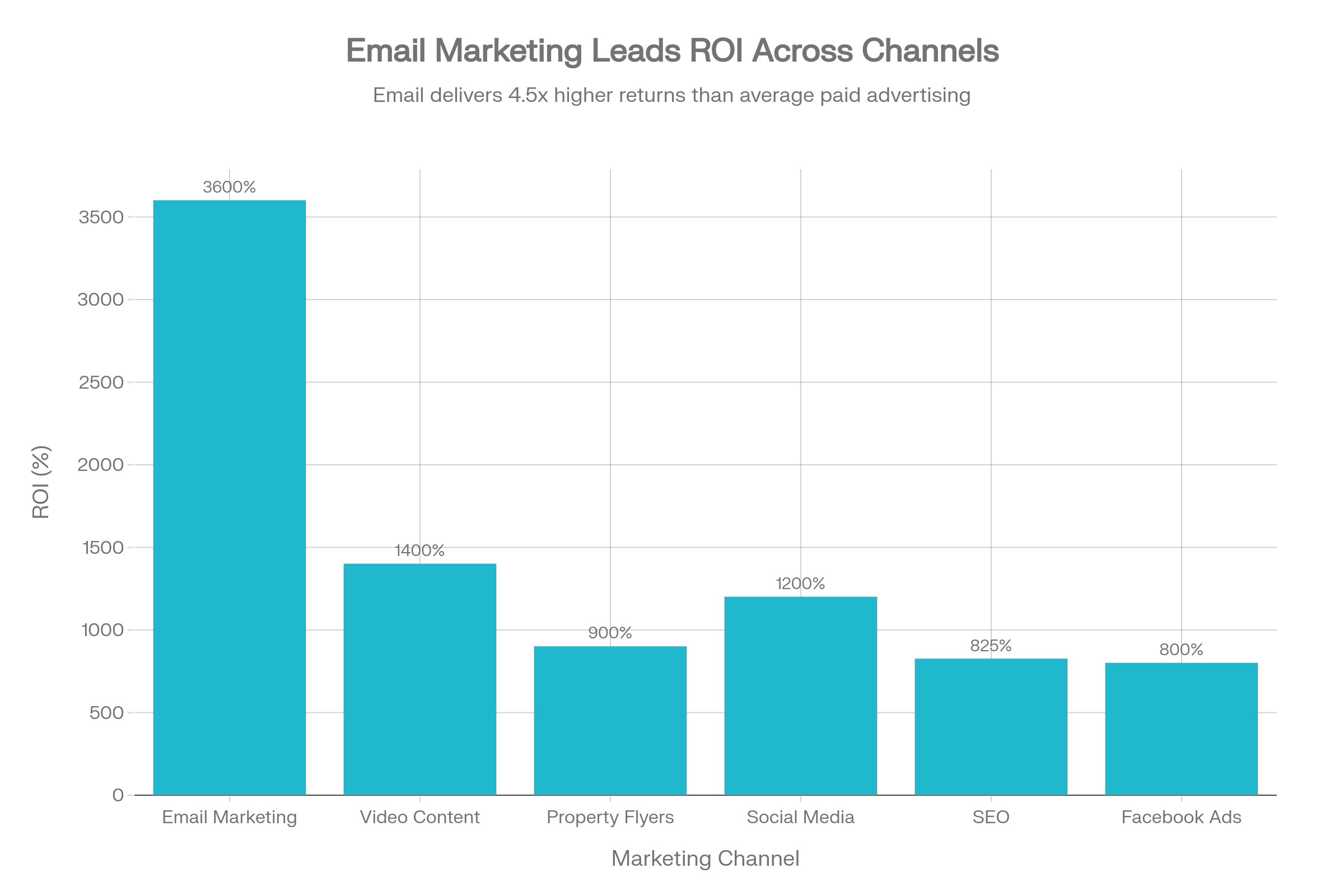
Email Marketing: The Channel That Generates 3600 Percent ROI
People often dismiss email as outdated, but the data tells a different story. Real estate agents who use email strategically see returns of $36 for every $1 spent. For email campaigns specifically designed to generate referrals, the ROI reaches 4,200 percent. No other marketing channel comes close to these numbers.
The problem isn't email. The problem is that most real estate agents use email incorrectly.
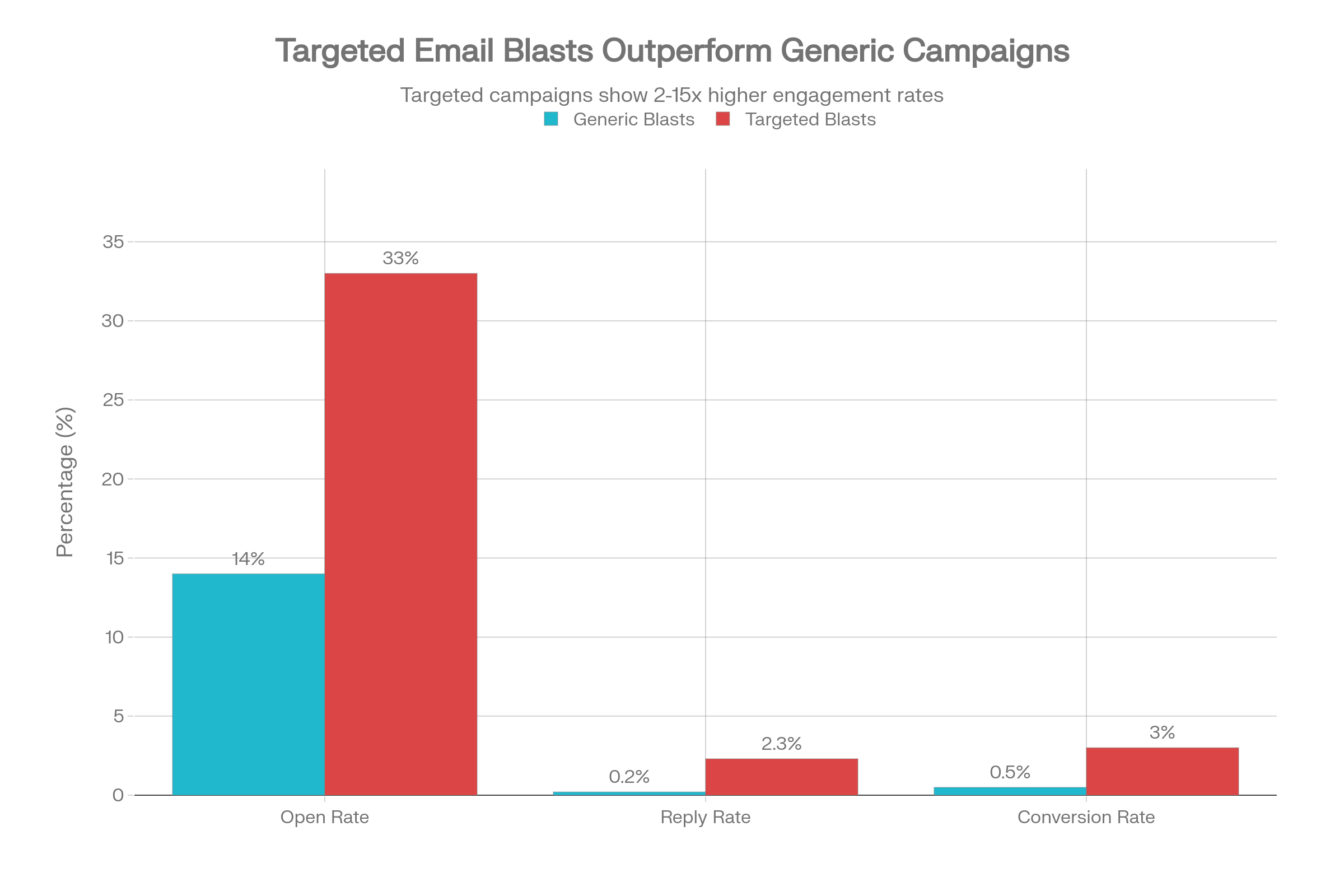
Generic email blasts sent to massive lists of random agents in other states generate 8 to 20 percent open rates, 0.1 to 0.3 percent reply rates, and almost no actual meetings or deals. The cost per campaign might run $500 or more, you get maybe one reply from someone genuinely interested, and you never hear from 99 percent of recipients.
Hyperlocal, targeted email campaigns tell a completely different story.
Open rates for targeted campaigns
Reply rates from qualified agents
Conversion rates to meetings/deals
Average cost per campaign
When an agent sends a property email blast to agents who have closed at least two transactions in the same zip code within the last 90 days, open rates jump to 26 to 40 percent. Reply rates hit 1.4 to 3.2 percent. Conversion rates reach 2 to 4 percent. More importantly, you're getting replies from agents who actually work your market and can actually send you referrals or buy listings from you.
Platforms like Blastrow exemplify this model. Instead of renting a list of 10,000 random agents nationwide, you upload a property or listing, and the system identifies 250 to 500 neighborhood specialists in your target area. These are agents with proven transaction history in your market. You send them a digital flyer and a short message explaining why you're reaching out. Cost per campaign: around $250. Expected result: 1 to 3 referrals or meeting requests per campaign.
One agent using this strategy reported a 119,900 percent return on investment from a single referral that closed. That's not hyperbole. That's the power of targeting the right person with the right message at the right time.
Here's How This Works in Practice
You list a property that might interest other agents' clients. Instead of hoping those agents see it on the MLS (where it's buried among hundreds of other listings), you create a simple email flyer highlighting the key details and send it to agents who specialize in that neighborhood. You've made their job easier by identifying a potential buyer for them. Now they're thinking about your service and how well you communicate. When they have a client moving to your area, you're top of mind.
Or you have a buyer from out of state who needs an agent in your market. Instead of calling random agents and making your client wait on hold, you send an agent-to-agent email blast to specialists in the areas where your client wants to look. You include details about your client's needs, timeline, and budget. Agents respond to you directly because they see a real opportunity, not spam. You've now built a professional relationship that generates referrals both directions.
The Power of Property Email Flyers for Agent-to-Agent Referrals
A property email flyer isn't a long sales email. It's a single-page digital document that presents a listing in visual format with key details, photos, maps, and your contact information. Think of it like a direct mail flyer, but faster and trackable.
Here's why property email flyers work so well for generating agent-to-agent referrals in 2026:
- Speed. A property email flyer gets into an inbox within minutes of creation, not days. In real estate, speed matters. An agent receives your flyer about a new listing, immediately thinks of a buyer they're working with, and reaches out to you the same day.
- Visual clarity. Agents are visual people. They see a photo, the address, the key details, and your phone number immediately. No scrolling. No searching for information. All the data they need to decide if they should refer is right there.
- Psychological reciprocity. When you send an agent a valuable opportunity (a potential buyer match), they naturally want to reciprocate by sending you referrals or business. This is human nature. You've made their job easier, so they make your job easier.
- Trackability. Unlike traditional direct mail, email flyers show you exactly who opened them and when. Some platforms, like Blastrow, show individual-level engagement. You see that Agent Maria opened your flyer three times. That tells you she's genuinely interested, and it's time to follow up with a call.
- Cost-effectiveness. A property email flyer campaign costs $250 to $500, versus $1,500 to $3,000 for a traditional direct mail postcard campaign. You get results faster and spend less.
The best agents in 2026 send property email flyers consistently. Not just when they have a listing to sell, but whenever they have a buyer looking for property in another agent's market. It's not about selling properties. It's about staying visible and helpful in your agent network, which generates referrals organically.
Content That Answers Real Questions: Reddit, Quora, and Google Searches
Where do your future referral sources get their information? They search Google. They read Reddit threads. They ask questions on Quora. They watch YouTube videos. They listen to podcasts. Each of these places is an opportunity to answer questions and establish expertise.
Here are the real questions people in your market are asking:
- •"How long does it actually take to close on a home?"
- •"Should I buy now or wait for prices to drop?"
- •"How do I know if I'm being offered a fair price?"
- •"What home inspection problems are deal-breakers?"
- •"Can I negotiate on closing costs?"
- •"What's this thing in my credit report affecting my loan?"
- •"Is this neighborhood actually good for families?"
- •"How much should I budget for updates after buying?"
Create content that answers these questions. Write blog posts. Record YouTube videos. Participate genuinely in Reddit real estate communities (don't spam, add real value). Create infographics that summarize complex information.
When someone reads your answer and thinks "Wow, this agent actually understands what I care about," they're likely to remember your name. When they eventually buy or sell, and a friend asks "Do you know a good agent?" they recommend you. When they move to another state and their friend needs an agent, they recommend you. That's how referral networks grow.
Sphere of Influence Nurturing: Keeping Your Network Warm
Your sphere of influence includes your friends, family, past clients, neighbors, colleagues, your accountant, your doctor, your barber, and anyone you interact with regularly. These are the people most likely to refer you business because they already know and like you.
The problem most agents face: they go dormant. They work with a client for three months, close a transaction, and then disappear for two years. When they do reach out, it feels like they only want something from their sphere. "Hey, I haven't talked to you in a year, but do you know anyone buying or selling a home?"
That doesn't generate referrals. That generates deleted texts.
Successful agents in 2026 implement consistent, low-touch systems to stay connected with their sphere without being annoying:
Monthly postcards or emails
The best systems automate this. On the first of every month, your entire sphere receives a postcard or email with a market update, a neighborhood feature, or useful information. Cost: minimal. Effort: none once it's set up. Impact: keeps your name in their head as someone who thinks about real estate.
Quarterly phone calls
You pick up the phone and call past clients, sphere contacts, and referral sources once per quarter. No agenda except to check in. "Hey, how's the house? How are the kids? Anything going on we should talk about?" These calls take 10 to 15 minutes, but they're gold for generating referrals because you're showing real interest.
Video content sharing
When you create a blog post or video, share it with your sphere. "Saw this article on property taxes in our county and thought of you. Give it a read and let me know what you think." You're not asking for a referral. You're staying visible by sharing expertise.
Social media engagement
Like and comment on your sphere's social media posts. Celebrate their wins. Share their business promotions if they own a business. Real, authentic engagement builds stronger relationships than any marketing message ever could.
Educational webinars or workshops
Host a webinar on "How to Prepare Your Home for Sale" or "First-Time Buyer Mistakes to Avoid." Invite your sphere. Make it valuable, not sales-focused. People who attend remember you as a thought leader, and they refer others to your expertise.
The consistency is more important than the method. A good system repeated monthly generates referrals. Random attempts at contact don't.
Referral Fees and BAC: What You Need to Know in 2026
In 2026, the real estate industry is still processing changes around referral fee transparency. Here's what you need to know if you're building a referral-based business.
A real estate referral fee is what one agent pays another for sending them a client. The standard is 25 percent of the receiving agent's gross commission income (GCI). This means if an agent closes a $400,000 home sale with a 5 percent commission ($20,000), and you referred them that buyer or seller, you receive $5,000 (25 percent of $20,000).
The range typically falls between 20 and 35 percent, depending on the market, relationship, and deal quality. Some agents offer higher percentages to attract more referrals. Some negotiate lower for repeat referral partners.
BAC stands for "broker as compensation" and refers to the practice of paying referral fees from the broker's commission split. This is standard and legal when both parties are licensed.
What's important to understand: building a referral business creates another revenue stream that doesn't require you to work directly with the client. You connect a buyer to a local agent specialist, close that connection, and earn a portion of the commission. This is how top agents in major markets build multiple six-figure income streams without burning out from face-to-face client work.
Building Your Referral Content Strategy: A Practical Framework
You don't need to create a thousand pieces of content. You need the right pieces, consistently published.
Start with your niche. Are you specializing in first-time buyers? Luxury homes? Investment properties? Commercial real estate? Downsizers? Once you know who you serve best, all your content points toward that audience.
Identify the top questions they ask. For first-time buyers, it might be "How much should I offer?" and "What are closing costs?" For luxury buyers, it might be "What due diligence should I do on a high-value property?" For investors, it might be "What's the ROI calculation I should use?" Go to Google, type your keywords, and look at the "People Also Ask" section. That's your content roadmap.
Create a content calendar. One blog post per week. One video per week or every other week. One email to your sphere per month. One property email blast per month to agent networks. This doesn't require hours of work once you set up templates and systems.
Repurpose content. A single blog post becomes a video script. The video becomes social media clips. The clips become email snippets. One piece of content creates five distribution channels.
Measure what matters. Track which content generates replies, which generates inquiries, which generates referrals. Not all views and likes. Those vanity metrics don't pay your mortgage. Real estate content success looks like: website visitors who contact you, emails that get replies, and ultimately, closed transactions and referrals.
Continuously improve. Every month, look at your performance data. What content got the most engagement? What generated actual referrals? Do more of that. What flopped? Cut it. Real estate marketing in 2026 requires constant optimization based on actual results.
FAQ: Common Questions About Content Marketing for Real Estate Referrals
Closing: The Referral-Driven Agent Wins in 2026
The real estate agents who thrive in 2026 aren't the ones spending the most on Facebook ads or radio commercials. They're the ones who've built systems around referrals. They understand that the cost of acquiring a referral is near zero compared to the cost of acquiring a cold lead. They understand that a referral closes faster, negotiates better, and stays longer as a client.
Building a referral business requires three things: consistent, valuable content that positions you as an expert; strategic communication with your sphere of influence and agent networks that keeps you visible; and measurable systems that track where your referrals come from and who's sending them your way.
Start this week. Choose one piece of content to create. Reach out to three people in your sphere. Send one property email blast to agents who work your market. These small actions compound. In three months, you'll have a system. In six months, referrals will start flowing. In a year, you'll wonder why you ever relied on paid advertising.
The strategy works. The question is whether you'll execute it.

Blastrow
Listing Promotions